
1. Kashmir Rugs: Intricate Luxury & Fine Silk Artistry
-
Materials: High-grade pure silk, fine wool, or silk-and-wool blends woven on a strong cotton foundation.
-
Technique: Extremely dense hand-knotting that allows for high-resolution pattern detail.
-
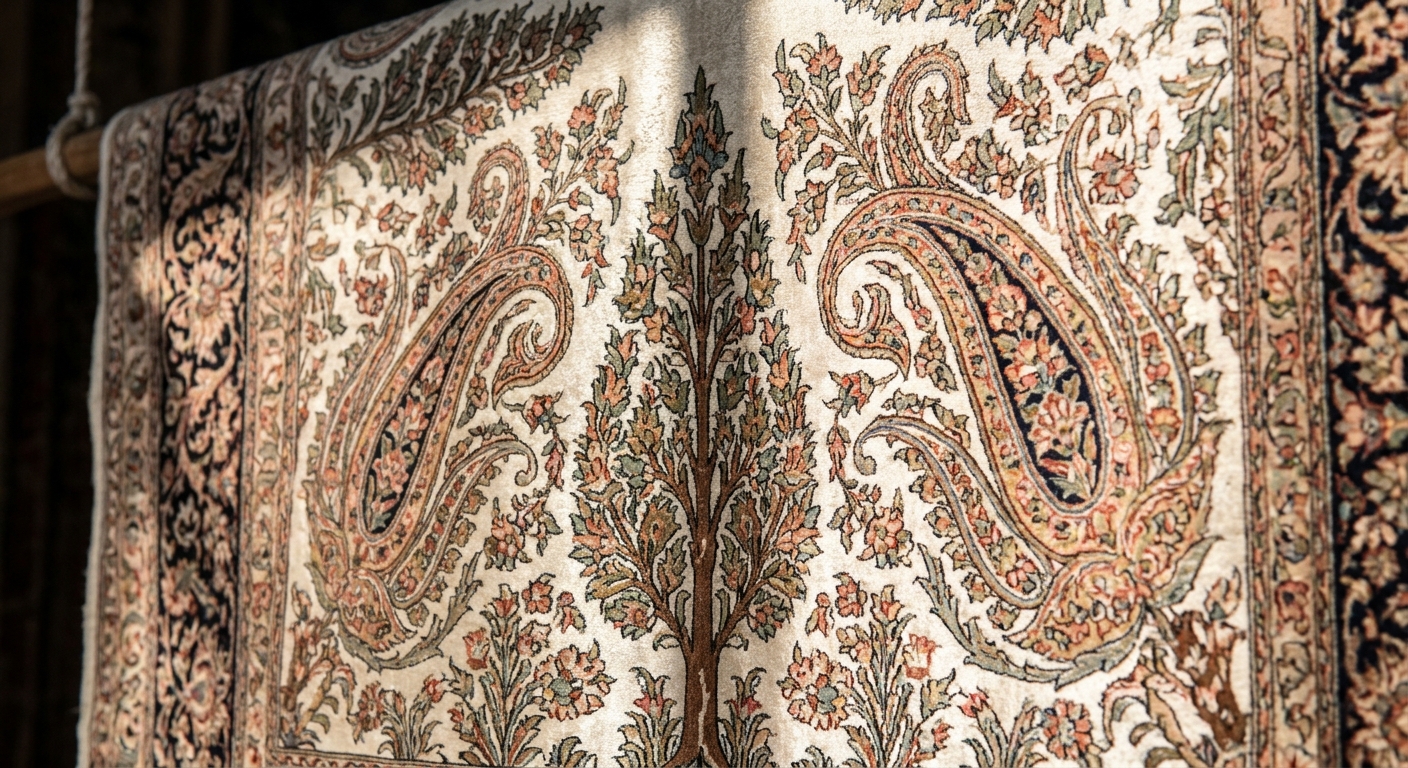
Signature Motifs: Boteh (paisley), chinar (oriental plane tree) leaves, intricate tree-of-life scenes, and lush floral sprays.
-
Aesthetic & Feel: Silky, soft to the touch, and lightweight with a luminous sheen reminiscent of classical miniature paintings.
Best For: Formal living spaces, low-traffic luxury rooms, or display on walls as textile art.
2. Indian Rugs: Versatility, Heritage & Modern Expression
-
Materials: A broad array of materials including soft wool, cotton, jute, and natural or artificial silk.
-
Technique: Highly diverse—ranging from traditional hand-knotted and hand-tufted piles to flat-woven dhurries.
-
Signature Motifs: Elegant Indo-Persian medallions, classic Mughal floral arrangements, geometric patterns, and modern minimalist abstracts.
-
Aesthetic & Feel: Adaptable. You can find everything from lightweight, rustic flat-weaves to plush, contemporary statement pieces.
Best For: Everyday living areas, dining rooms, and homes seeking tailored style at varied price points.
3. Tibetan Rugs: Highland Resilience & Sacred Motifs
-
Materials: High-resilience Tibetan highland wool, rich in natural lanolin which naturally repels dirt and stains.
-
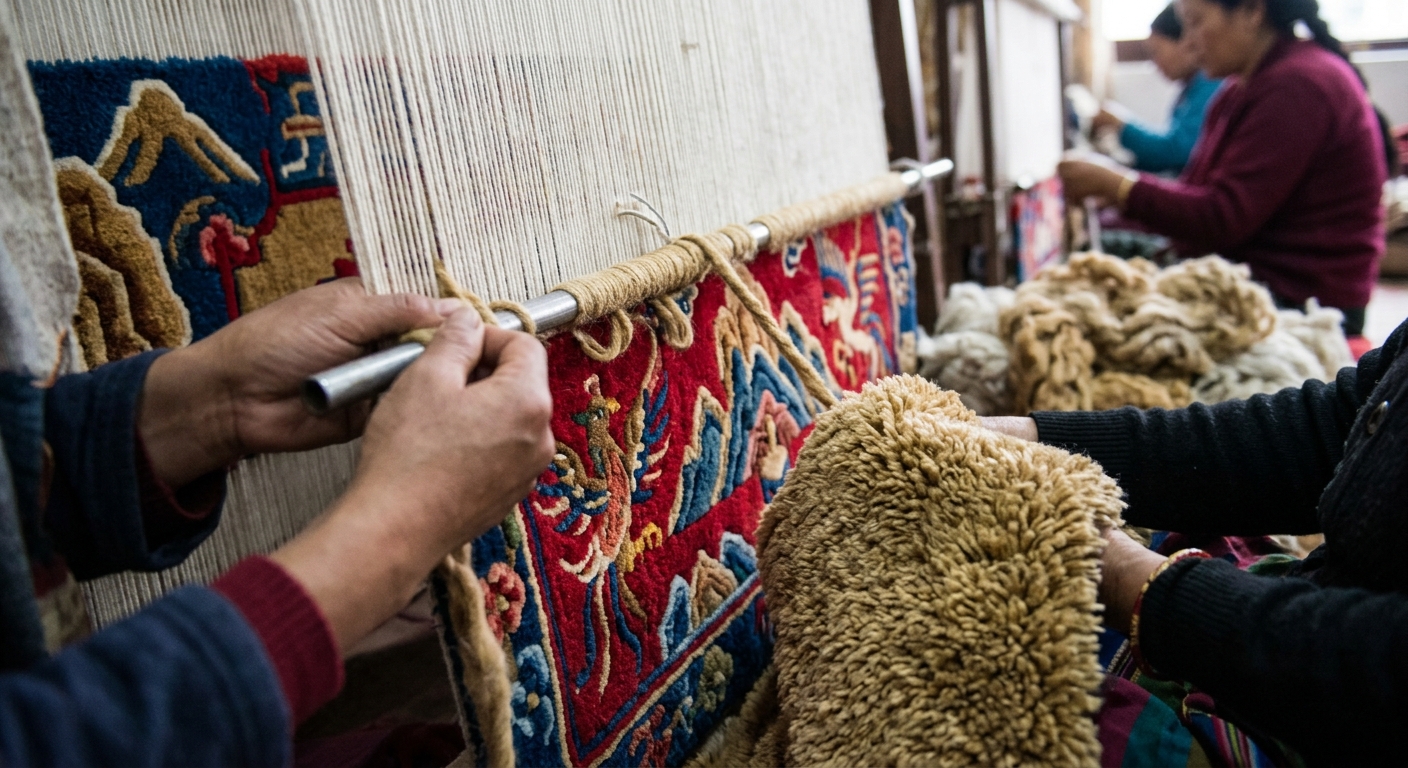
Technique: A unique knotted-loop technique using a temporary rod, often finished by cutting the loops to create a textured, sculpted pile.
-
Signature Motifs: Sacred Buddhist symbolism, snow lions, dragons, phoenixes, lotus blossoms, and bold mountain geometries.
-
Aesthetic & Feel: Exceptionally thick, dense, and heavy, featuring rich earthy tones and vibrant palettes.
Best For: High-traffic family spaces, cozy bedrooms, and bohemian or modern interiors seeking texture and character.
Quick Comparison
| Feature | Kashmir Rugs | Indian Rugs (General) | Tibetan Rugs |
| Origin | Kashmir Valley (Srinagar) | Jaipur, Agra, Bhadohi, Mirzapur | Tibet, Nepal, Northern India |
| Primary Materials | Silk, Wool-Silk, Cotton | Wool, Cotton, Jute, Silk | Lanolin-rich Highland Wool |
| Weave Style | Ultra-fine Hand-knotted | Hand-knotted, Tufted, Flat-weave | Unique Knotted-Loop |
| Look & Feel | Luminous, soft, intricate | Versatile, classic to modern | Thick, plush, heavy-duty |
1. Kashmir Rugs: Fine Silk and Intricate Detail
This image is a close-up capturing a Kashmir rug hanging in a traditional Srinagar workshop. It emphasizes the luxurious sheen of the pure silk material and the incredibly fine, labor-intensive knotting required for its intricate patterns. You can clearly see signature motifs like the complex paisley (boteh), lush floral sprays, and the overall ‘miniature painting’ aesthetic.
2. Indian Rugs: Versatility and Broad Production
This image shifts perspective to show the versatility and scale of general Indian rug production. Set inside a busy workshop in Jaipur, the scene features a stack of diverse finished rugs: colorful geometric flat-woven dhurries (made of cotton and jute) and plush hand-tufted wool rugs with modern abstract and traditional Indo-Persian patterns. Weavers work on large looms in the background, showing a bustling manufacturing hub.
3. Tibetan Rugs: High-Resilience Wool and Unique Technique
This image captures the tactile texture and unique construction of a Tibetan rug. A close-up view in a workshop focuses on a weaver’s hands actively using the unique knotted-loop technique, wrapping thick, lanolin-rich Tibetan highland wool around a temporary metal rod. The partially completed rug displays distinct, bold Tibetan motifs—a stylized phoenix and mountains—in vibrant, earthy, and bright colors, contrasting sharply with the previous fine weaves.
How to Choose the Right Rug for Your Home
-
For Opulence & Detail: Choose a Kashmir rug if you prioritize fine craftsmanship, subtle sheen, and detailed floral artistry.
-
For Style Versatility & Budget Options: Opt for Indian rugs, which offer everything from casual cotton flat-weaves to bold contemporary wool statement pieces.
-
For Durability & Warmth: Select a Tibetan rug if you want a thick, comfortable pile built to withstand heavy daily use while bringing ancient symbolic art into your space.