
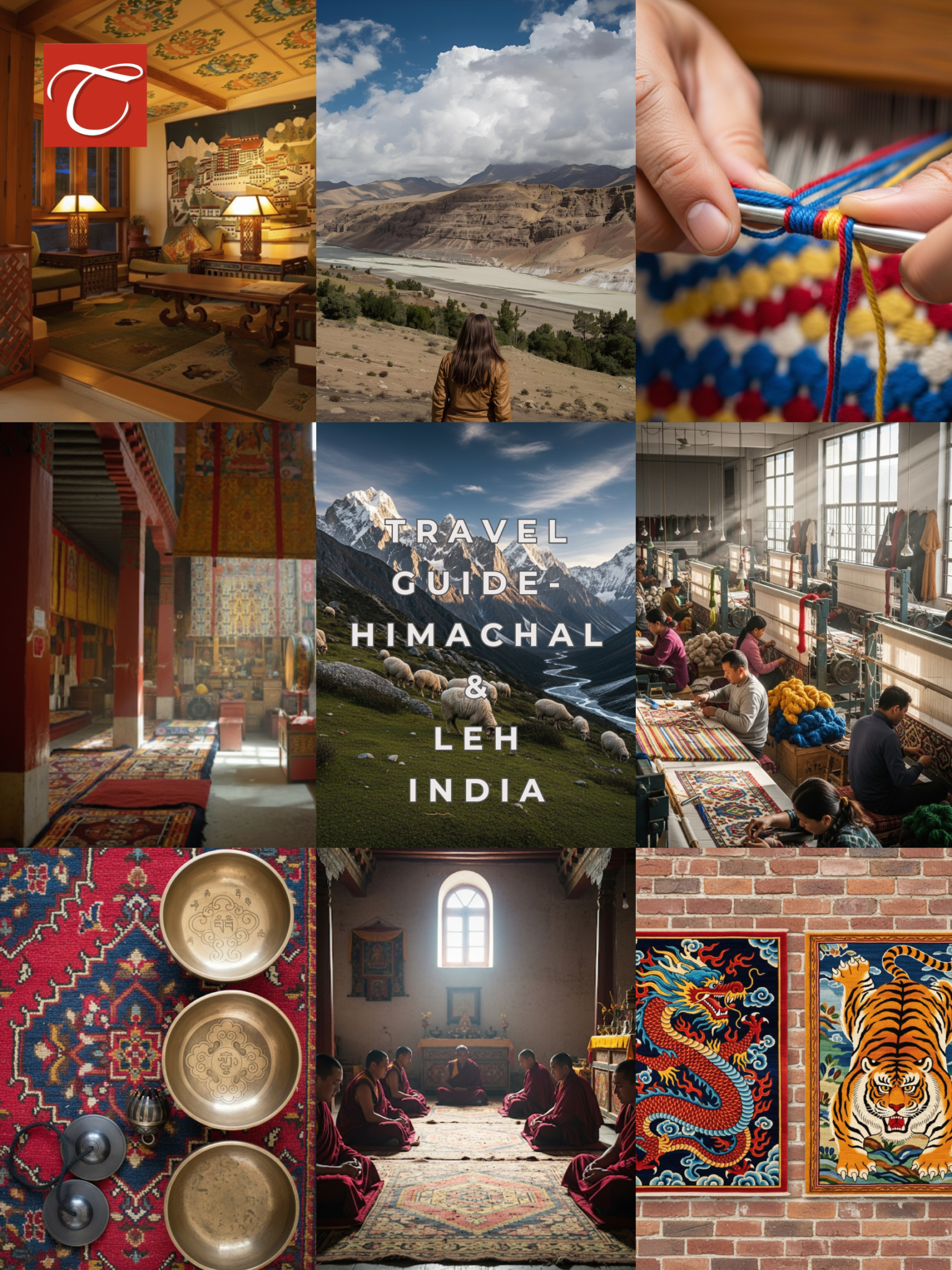
Himachal Pradesh is a hub for Tibetan culture and is home to a significant number of Tibetan refugees and monasteries. Here’s a guide to some of the most important places to visit:
Dharamshala and McLeod Ganj (Little Lhasa)
Often called “Little Lhasa,” McLeod Ganj is the heart of the Tibetan community in exile and the residence of His Holiness the 14th Dalai Lama.
- Tsuglagkhang Complex: This is the most important site and the home of the Dalai Lama. The complex includes the Dalai Lama’s temple, a museum, and a bookstore. It’s a place for spiritual learning and witnessing daily rituals.
- Namgyal Monastery: Known as the Dalai Lama’s personal monastery, it’s a center for the study of Tibetan Buddhism and culture.
- Norbulingka Institute: This institute is dedicated to preserving Tibetan art and culture. You can witness artists practicing traditional crafts like Thangka painting, wood carving, and tailoring. The complex also features beautiful gardens and a temple.
- The Tibet Museum: Located within the Tsuglagkhang Complex, the museum provides a powerful and moving look at Tibetan history, culture, and the Chinese occupation.
- Tibetan Institute of Performing Arts (TIPA): This institute was founded to preserve and promote Tibetan artistic heritage, including opera, dance, and music.
Bir-Billing
Known globally for paragliding, Bir is also a significant Tibetan colony established in the 1960s.
- Chokling Monastery: A prominent monastery in Bir, it’s a center for religious ceremonies and meditation.
- Sherab Ling Monastery: Located a short drive from Bir, this monastery is a key center of the Karma Kagyu branch of Tibetan Buddhism and is known for its serene environment.
Spiti Valley
The remote and high-altitude Spiti Valley is famous for its ancient monasteries and stunning, rugged landscapes. The monasteries here are some of the oldest in the Himalayas.
- Key Monastery (Kye Gompa): This is one of the most iconic and largest monasteries in the Spiti Valley, perched on a hilltop overlooking the Spiti River. It’s a key center for monastic training.
- Tabo Monastery: Founded in 996 AD, this is one of the oldest functioning Buddhist monasteries in India. It’s often called the “Ajanta of the Himalayas” for its ancient murals and stucco statues.
- Dhankar Monastery: Situated precariously on a cliff, this ancient monastery once served as a fort and a place of worship. The views of the confluence of the Spiti and Pin rivers from here are breathtaking.
- Kungri Gompa: Located in the Pin Valley, this is the main center of the Nyingma-pa sect in Spiti. It’s the second oldest monastery in the valley and is known for its Tantric practices.
Leh Ladakh
Leh Ladakh, on the western edge of the Tibetan Plateau, is a land of stunning landscapes and ancient Tibetan Buddhist culture. Its monasteries, known as gompas, are architectural marvels often perched on dramatic hilltops.
- Hemis Monastery: One of Ladakh’s largest and wealthiest monasteries, known for its annual Hemis Festival.
- Thiksey Monastery: A 12-story complex on a hilltop, often called “Mini Potala Palace” for its resemblance to the Potala Palace in Lhasa.
- Lamayuru Monastery: One of the oldest monasteries in the region, set amidst a unique “moonland” landscape.
- Alchi Monastery: Distinct from most others as it is on flat ground, it’s famous for its well-preserved 11th-century murals that showcase a blend of Indian and Tibetan art.
- Diskit Monastery: The largest monastery in the Nubra Valley, featuring a massive statue of Maitreya Buddha overlooking the valley.
- Phugtal Monastery: A truly remote and unique site, this monastery is built around a natural cave on the side of a cliff in the Zanskar region.
- Leh Palace & Shanti Stupa: While not monasteries, these are important cultural sites in Leh. Leh Palace is a former royal residence, while Shanti Stupa is a Japanese-built stupa offering panoramic views of the city.
Tips for your visit:
- Best Time to Visit: The summer months (May to September) are generally the most pleasant for visiting, with accessible roads and good weather. Some high-altitude monasteries in Spiti may be inaccessible in winter due to heavy snowfall.
- Respectful Etiquette: Dress modestly, covering your shoulders and knees. Remember to take off your shoes before entering temples and monasteries. Maintain silence and do not disturb monks during prayer or meditation.
- Local Culture: You can find many opportunities to experience local culture, from trying authentic Tibetan food like momos and thukpa to shopping for handicrafts and listening to monks chanting.